
Database Engagement Insights
Introduction
In the vast expanses of organizational data, databases often linger in the shadows. These are databases that, whether due to evolving business needs or legacy systems, see minimal or no activity. Recognizing and acting on these databases is crucial—not only to optimize resources, but also to strengthen security and improve operational efficiency.
Capacity planning is a critical discipline for any IT organization. It enables growth while also ensuring that unnecessary and unused assets are removed. If deleting old Word or Excel files feels risky, the idea of detaching and deleting databases can feel even more daunting.
So how do we approach this safely?
How can DB24 support capacity planning by helping you identify and remove unused databases?
The first step is identifying databases that may no longer be in use—what DB24 refers to as Rarely Used Databases. Rarely used does not necessarily mean unused, but DB24 can help determine the difference.
Identifying Rarely Used Databases
DB24 identifies rarely used databases using multiple criteria.
Low Frequency of Access
Databases that are accessed infrequently may no longer be actively used.
From DB24 version 2024.1, DB24 checks every other minute for active connections to all databases. Databases with no detected access appear in the DB24 Rarely Used Database report.
- As soon as a database is accessed, it is automatically removed from the list.
- This simple but effective logic reveals that, on average, 20–30% of customer databases may be candidates for removal.
Recommendation:
DB24 generally recommends waiting until a database has appeared in the Rarely Used Database report for 12 months, reaching approximately 90% confidence, before taking action.
Connection Data
Another effective method for identifying removal candidates is reviewing connection data.
DB24 logs detailed connection information, showing:
- Who or what is connecting to each database
- Which applications or services rely on them
This data is valuable for:
- Asset management
- Application dependency analysis
- Validating whether databases are still required
Reviewing this information in the DB24 Portal provides additional confidence when evaluating databases for removal.
Implications of Neglecting Rarely Used Databases
Failing to address databases that are no longer actively used can introduce several risks.
Security Risks
Databases without clear ownership are often:
- Poorly maintained
- Infrequently patched
- Overlooked during security reviews
This increases exposure to vulnerabilities and potential cyber threats.
Resource Wastage
Unused databases still consume resources, including:
- Storage
- Licensing
- Administrative effort
These costs accumulate over time and divert resources away from more critical systems and initiatives.
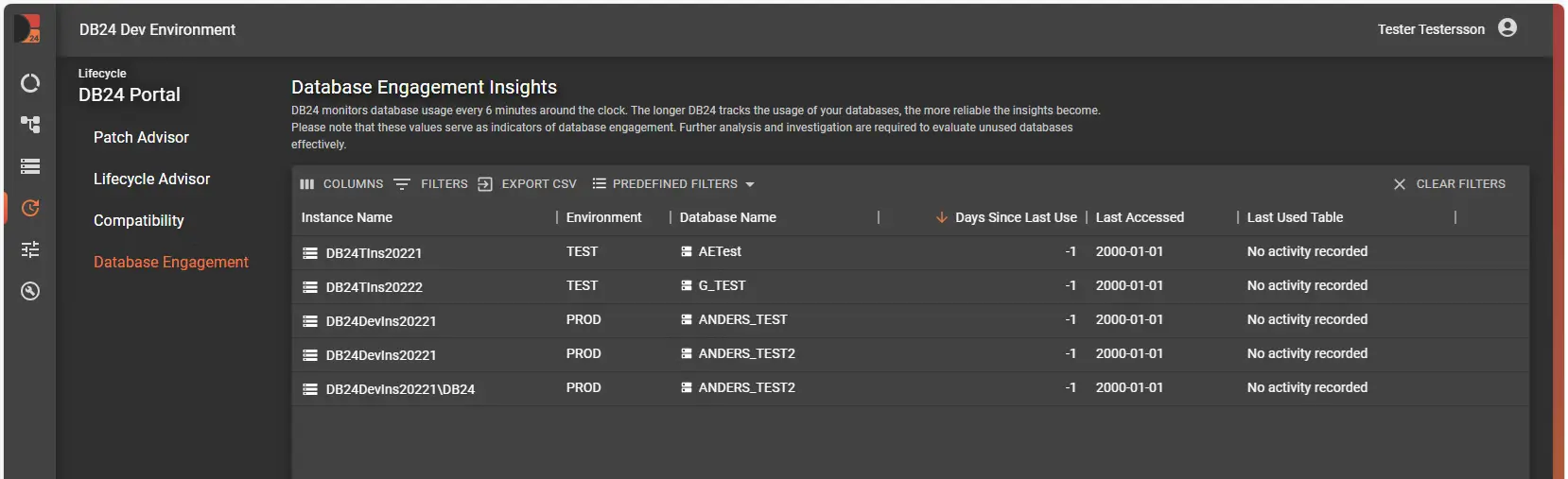
Database Engagement Insights
DB24 monitors database usage every 6 minutes, 24/7.
The longer DB24 tracks your environment, the more accurate and reliable the engagement insights become.
Important:
Engagement metrics should be treated as indicators, not absolute truth.
Further investigation and validation are always recommended before classifying a database as unused.
Conclusion
Recognizing and managing rarely used databases is not just an IT housekeeping exercise—it is a strategic necessity.
By proactively identifying and addressing underutilized databases, organizations can:
- Improve security posture
- Reduce operational and licensing costs
- Simplify environments
- Ensure data assets are intentionally managed and protected
With Database Engagement Insights, DB24 enables informed, confident decisions about which databases truly deserve to remain part of your environment.
Related Documentation
- DB24 Overview - Platform introduction
- Portal Configuration - Web interface setup